
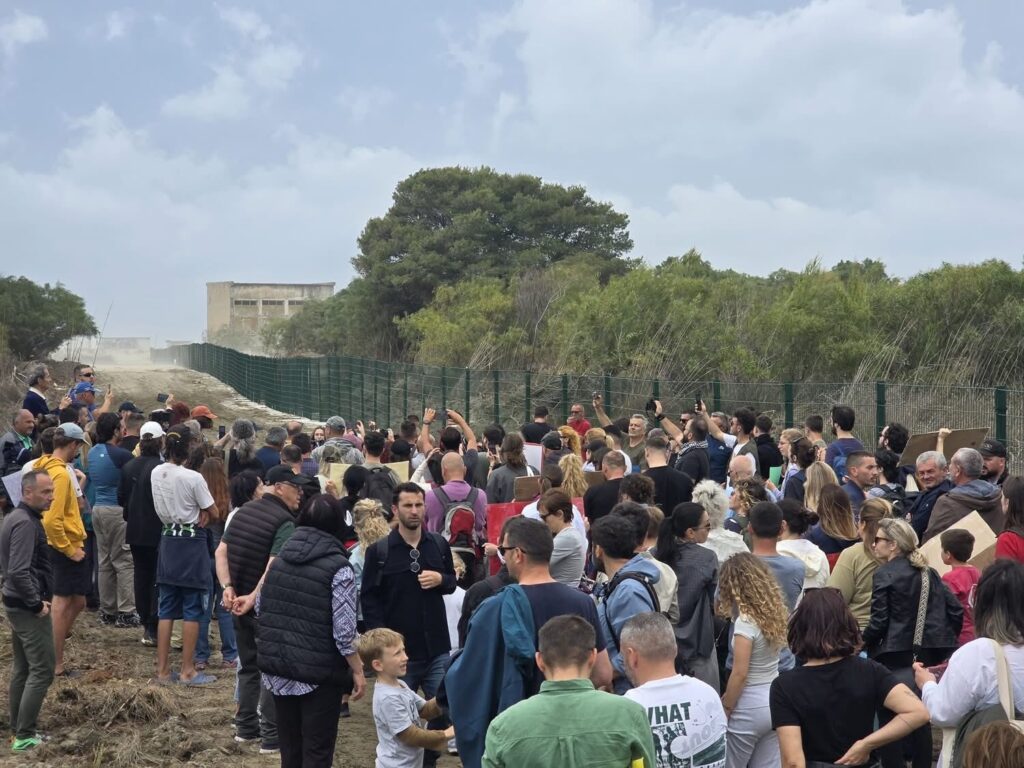
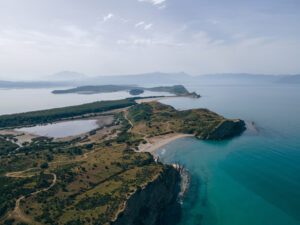
Steel fencing now cuts across stretches of Albania’s southern coastline near Zvërnec and the Narta Lagoon, where a vast luxury tourism development linked to Jared Kushner and Ivanka Trump has triggered mounting protests, environmental alarm and accusations that one of the country’s last untouched coastal ecosystems is being quietly sealed off from the public.
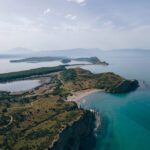
The fenced territory, extending across roughly 300 hectares of private land between the lagoon and the Adriatic Sea, is expected to host a multi-billion-dollar tourism complex involving international hotel brands, villas, marinas and luxury resorts.
For many residents and activists, however, the first visible sign of the project has not been economic promise but metal barriers rising across dunes, beaches and pine-covered coastal terrain long considered part of the public landscape.
Heavy machinery, newly opened internal roads and concrete-filled pits have appeared inside the protected Pishë Poro–Nartë area in recent weeks, while access to parts of the coastline has become increasingly restricted.
Although the Albanian state has not formally unveiled the full project, officials have unofficially acknowledged that preliminary development and construction permissions for the site have already been granted, allowing the area to be fenced and preparatory works to begin.
The final architectural proposal remains undisclosed.
According to reports surrounding the investment, the masterplan is being developed by three internationally recognised European and global architecture studios and is expected to be submitted for approval in the coming days.
The lack of public transparency has intensified criticism from environmental groups and local residents, many of whom say they learned about the scale of the project only after fences began appearing along the coast.
Environmental organisations PPNEA and EuroNatur have accused institutions of withholding environmental documentation and advancing the process without meaningful public consultation.
Activists warn that construction activity is taking place during wildlife breeding season inside one of Albania’s most ecologically sensitive coastal zones, home to migratory birds, fragile lagoons, sand dunes and protected habitats.
According to environmentalists monitoring the area, centuries-old natural dunes are already being rapidly degraded by the works underway.
The confrontation escalated after protesters entered the construction zone and tore down sections of fencing, accusing authorities and investors of privatising public coastline in the name of elite tourism development.
Local fishermen and residents say access routes traditionally used for generations are now blocked or heavily restricted.
Environmental monitors have also reported aggressive behaviour while attempting to document the works on site.
Supporters of the project argue that the development is taking place entirely on private land and could transform the region into a high-end Mediterranean tourism destination capable of attracting global investment and creating jobs.
But critics say the symbolism of fencing off large stretches of protected coastline has become central to the anger surrounding the project.
For many in Albania, the debate is no longer only about tourism development. It is about who has the right to access the country’s coast — and what remains of its disappearing wild spaces.




Don’t let the trump family into your country. They destroy everything they touch.
Interesting points about evolving casino tech! Platforms like jl66 login are really focusing on mobile & localized experiences for players – a smart move in the Philippine market. Accessibility is key!
All the best
Enjoy every single day