
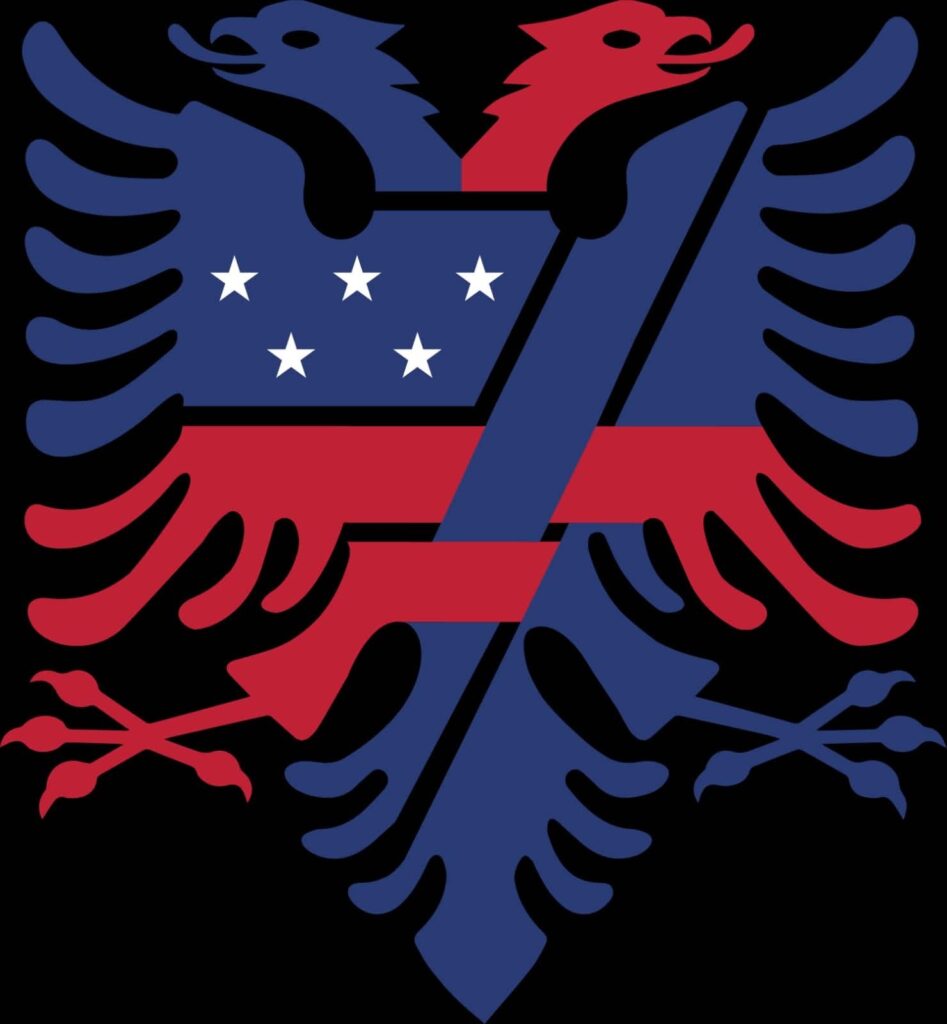
Op-Ed by Albanians for America
Kosovo’s membership in NATO is not only a national priority but also a necessity and a guarantee of stability not only for Kosovo, but for the entire region.
Developments in the European security landscape and the growing likelihood of confronting complex security challenges underscore the need to accelerate this process rather than delay it. The sooner Kosovo becomes a member of NATO, the more secure the Western Balkans will be.
Serbia’s continued efforts to destabilize Kosovo have demonstrated the urgency of Kosovo’s accession to NATO.
The terrorist attack of September 24, 2023, in Banjska remains the clearest example of this threat. A heavily armed and organized group attacked the Kosovo Police, killing Sergeant Afrim Bunjaku. To this day, the chief perpetrator, Milan Radojçiq, remains free in Serbia, while three other attackers have been sentenced to life imprisonment. Serbia’s refusal to hand over Radoičić and others involved to Kosovo’s judicial authorities sends a deeply troubling message to the entire region.
As if this were not enough, in November 2024 another terrorist act targeted critical infrastructure, severely damaging the Ibër-Lepenc canal.
For precisely these reasons, Kosovo’s NATO membership should be viewed as a preventive instrument—not as a source of tension.
In this context, on April 30, 2026, Republican Congressman Keith Self, Chairman of the Europe Subcommittee of the U.S. House Foreign Affairs Committee, together with Congressmen Ritchie Torres and Mike Lawler, introduced Resolution H.Res.1246. The resolution expresses clear support for Kosovo’s integration into NATO and calls on NATO member states that have not yet recognized Kosovo to reconsider their positions.
This resolution represents a strategic assessment of recent developments in Europe, a warning about emerging risks in the Western Balkans, and a clear vision for strengthening Euro-Atlantic security during a delicate period for international security.
Therefore, Kosovo’s accession to NATO is not only in Kosovo’s interest, but also in the interest of NATO itself, regional stability, and European security. In today’s geopolitical reality, keeping Kosovo outside NATO poses a greater risk than admitting it.
Among all current debates concerning Euro-Atlantic security, Kosovo’s NATO membership should be one of the clearest issues.
For more than two decades, Kosovo has demonstrated that it is a success story of NATO’s and the United States’ strategic investment. NATO’s intervention in 1999 halted a humanitarian catastrophe and created the conditions for building a democratic and pro-Western state.
Today, Kosovo ranks among the countries with the highest levels of public support for NATO and the United States worldwide.
Euro-Atlantic orientation is an integral part of Kosovo’s identity, making Congressman Self’s resolution fully aligned with this reality.
The resolution comes at the right moment given developments across Europe, as the Western Balkans remain one of the regions most vulnerable to destabilizing influences.
In this context, Serbia continues to represent a risk factor for regional stability. Although it formally aspires to join the European Union, Belgrade continues to refuse alignment with the EU’s foreign and security policy by declining to impose sanctions on Russia while maintaining close political, economic, and military ties with Moscow and Beijing.
At the same time, Serbia has invested billions of euros in modernizing and expanding its military capabilities. In recent years, it has acquired advanced weapons systems from Russia, China, France, and other countries, creating the largest military potential in the Western Balkans. This military buildup has consistently been accompanied by nationalist rhetoric, rejection of political realities, and persistent destabilizing efforts.
Under such circumstances, Serbia’s continued attempts to undermine Kosovo’s sovereignty and territorial integrity—and to destabilize the wider region—can only be effectively deterred once NATO opens its doors to Kosovo.
The history of the Alliance demonstrates that NATO prevents conflicts. Countries that become part of the collective defense mechanism under Article 5 enter a system that guarantees long-term stability.
Kosovo’s membership in NATO would deter any attempts by Serbia or other actors to destabilize Kosovo and the region. By reducing the possibility that northern Kosovo remains a potential flashpoint for escalation, NATO membership would send a strong and unequivocal message that Kosovo’s borders, sovereignty, and territorial integrity are inviolable.
Kosovo’s membership would also strengthen the Alliance itself. One more partner means greater security.
Kosovo has taken concrete steps toward meeting NATO standards. The Kosovo Security Force (KSF) is being transformed according to Alliance standards, while Kosovo’s institutions cooperate closely with Western partners. Unlike many countries that seek closer ties with NATO for purely pragmatic reasons, Kosovo views the Alliance as part of its strategic identity.
One of the strongest arguments in favor of Kosovo’s NATO membership is the remarkable transformation of the Kosovo Security Force over the past decade. In line with its Comprehensive Ten-Year Transition Plan, the KSF has evolved from a force with a primarily civilian mandate into a modern defense force organized and trained according to NATO standards.
Investment in the defense sector has increased significantly, and Kosovo has taken concrete steps to modernize its military capabilities. In close cooperation with the United States and other Western allies, the KSF has been equipped with modern tactical mobility systems, armored vehicles, advanced communication systems, and other equipment that enhance operational readiness and defensive capabilities.
Particularly important has been the partnership with the United States, which has played a key role in training, professionalizing, and strengthening the KSF. Joint training programs, military education at American academies, and continued cooperation with the Iowa National Guard have helped create a force that now operates according to NATO doctrines and procedures.
The KSF has also gained valuable experience through participation in international peacekeeping operations, including in Gaza, following Kosovo’s invitation to join the Partnership for Peace framework by U.S. President Donald Trump.
In this sense, Kosovo would not merely be a beneficiary of collective security, it would also be a contributor to it.
For this reason, Congressman Keith Self’s proposal deserves serious attention in Washington, Brussels, and the capitals of NATO member states.
It accurately reflects the necessity of Kosovo’s accession to NATO, taking into account today’s security architecture and recognizing that security gray zones do not produce stability, they produce insecurity.
Kosovo is not asking for a favor. It is asking for its rightful place within the Euro-Atlantic family, because Kosovo belongs in NATO.
NATO should not allow one of its most reliable partners, in one of Europe’s most sensitive regions, to remain outside the Alliance any longer.






The app is a game changer for me. It is so much more convenient to bet on the go via descargarbetssonchile.
I had a lucky streak here last night and the withdrawal was instant. Five stars for 5win777 for the honesty and speed.
I really love the variety of games here. The interface is smooth and the payouts are quite fast. Definitely my new favorite spot to unwind. Check out casinoelsol for a great experience.