
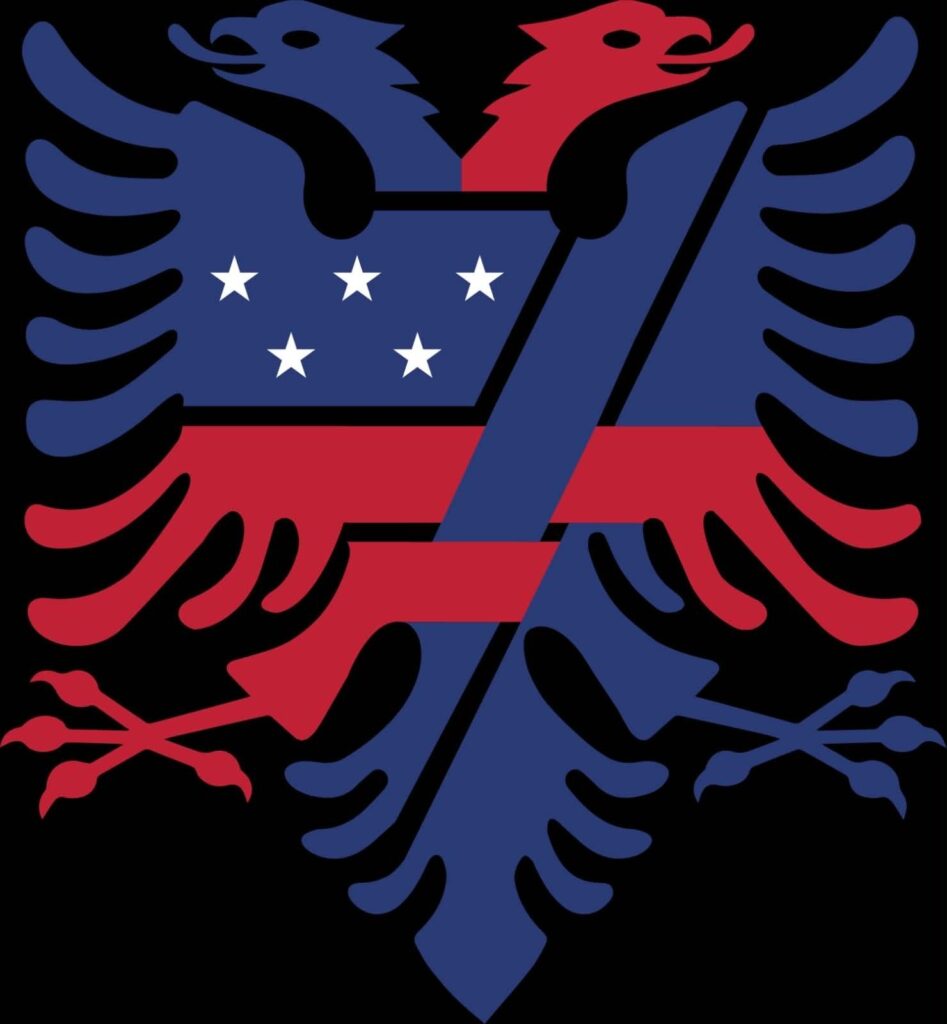
Albanians For America
In June 1999, as the war for Kosova’s freedom had come to an end, Albanian-American brothers Agron, Mehmet, and Ylli Bytyqi had completed the mission for which they had left behind their lives in the United States. As members of the volunteer Atlantiku Battalion, they had fought alongside the Kosovo Liberation Army (KLA), contributing to the liberation of the country.
With the end of the war, their military mission was over. On June 23, 1999, just days after Kosova’s liberation, they undertook a deeply humanitarian act by escorting two Romani families from Prizren to Serbia so they could safely reach Kraljevo.
However, not everything went as planned. During the journey, they inadvertently crossed the border from Kosova into Serbia.
Despite their humanitarian mission, Serbian police arrested them for illegally crossing the border. The Misdemeanor Court in Prokuplje sentenced them to 15 days in prison.
The fighters for freedom witnessed Kosova’s liberation, but they never had the chance to enjoy it.
Just days before completing their sentence, they were handed over to Serbia’s Ministry of Internal Affairs. They were taken to the police training center in Petrovo Selo, where they were bound, executed with gunshots to the back of the head, and buried in a mass grave alongside the bodies of other Albanians killed during the war in Kosova.
Their remains were not discovered until 2001 in Petrovo Selo, revealing not only the brutality of the crime but also the organized effort to conceal it.
Not every unsolved crime remains unresolved because of a lack of evidence. Some remain unresolved because of a lack of political will. The Bytyqi brothers’ case is one of them.
The circumstances surrounding their arrest, transfer, and execution leave no room for the claim that this was an isolated act.
Yet nearly three decades later, Serbia has still failed to identify, arrest, and prosecute those who ordered and carried out this crime.
Through systematic obstruction, the Serbian state has consistently demonstrated a lack of political will to bring the Bytyqi case to its conclusion and ensure that those responsible are held accountable.
Few cases expose the gap between Belgrade’s political declarations and the actions of its institutions more clearly than the Bytyqi case. For more than two decades, Serbian presidents, prime ministers, and ministers have repeatedly promised cooperation and justice.
In January 2006, President Boris Tadić publicly pledged that those responsible would be brought to justice. Later, as prime minister, Aleksandar Vučić repeated the same promise on several occasions.
In 2017, three sources told BIRN that Serbian President Aleksandar Vučić had acknowledged that former Serbian police officer Goran Radosavljević, known as “Guri,” was responsible for the murder of the three Albanian-American Bytyqi brothers.
Since then, no concrete developments have supported that admission, while Serbia’s president has continued to pursue an obstructionist approach toward justice.
Even as Serbian officials continued repeating promises to solve the murder of the Bytyqi brothers, the judicial process failed to identify those responsible, despite years of investigations and legal proceedings.
Two police officers, Sreten Popović and Miloš Stojanović, were charged with participating in the transfer of the brothers to the location where they were executed, but both were acquitted. The Court of Appeals ordered a retrial, which produced the same outcome. Paradoxically, the officers were acquitted once again.
The courts accepted that the Bytyqi brothers had been arrested, transferred by Serbian state authorities, and later murdered. Yet no one was found guilty, despite evidence implicating senior figures within the chain of command.
Serbian prosecutors themselves raised concerns about the role of those who commanded the Petrovo Selo facility and about the influence powerful individuals exerted over witnesses. Prominent Serbian human rights activist Nataša Kandić withdrew from the proceedings, arguing that the trial was not designed to deliver justice for the victims but rather to protect those who had ordered the brutal killings.
In a country governed by the rule of law, these would have been grounds to expand the investigation. Remarkably, in Serbia, they became grounds to close it.
The Serbian judiciary’s attempt to conceal the traces of this crime and shield those involved has compelled the United States to remain consistently engaged in ensuring that this case is not forgotten.
Accordingly, the FBI and U.S. authorities opened their own investigation alongside Serbia’s. The U.S. Congress has passed dedicated resolutions, while the House Foreign Affairs Committee has held hearings on the case.
Republicans and Democrats alike have spoken with one voice. Every U.S. administration, without exception, has demanded the same thing: the identification and prosecution of those who ordered and carried out the murders.
Yet despite all this, 27 years after the Bytyqi brothers were killed, the case remains open, unresolved, and without any genuine willingness on Serbia’s part to conclude it through justice.
For years, Serbia has sought a strategic partnership with the United States, greater economic cooperation, foreign investment, and a stronger role within Europe’s security architecture. Yet the shadow of Petrovo Selo continues to hang over those ambitions.
For Washington, the Bytyqi case remains an unresolved war crimes case because it concerns three American citizens who were brutally executed after being released by court order and taken into the custody of Serbian state authorities.
The passage of time does not diminish responsibility; it only makes the failure to uphold it more evident. Nor has it weakened America’s determination to see justice finally served.
After 27 years, the absence of justice is no longer merely a procedural delay—it has become part of the problem itself. Every passing year deepens the suffering of the Bytyqi family while prolonging Serbia’s resistance to the truth.
Serbia’s political expediency and continued obstruction of justice must come to an end. It must acknowledge its state responsibility for this case.
The Bytyqi case is a test of Serbia’s justice system and, at the same time, a clear demonstration of the Serbian state’s lack of willingness to confront its past.
The facts are well established. The entire sequence—from the arrest of the Bytyqi brothers to their brutal execution and burial in a mass grave—is known.
What remains unknown is why Serbia continues to refuse so persistently to follow the chain of command to its conclusion, bringing an end to decades of delay and finally delivering justice.
The fact that the victims were not only Albanians from Kosova but also American citizens explains why this case has remained on the agenda of every U.S. administration.
For that reason, the continued delay in achieving justice and Belgrade’s empty promises must carry political consequences.
This principle was reaffirmed in the resolution introduced in Congress last year by Congressman Nick LaLota, which not only calls on Serbia to prosecute those who ordered and carried out the murders, but also reiterates that progress on the Bytyqi case remains an important factor in U.S.-Serbia relations.
For more than a quarter of a century, Serbia has lacked the political will necessary to allow the truth to prevail.
The Bytyqi case remains an open wound for the family and for Albanians, an unresolved issue for the United States, and an enduring reminder of Serbia’s refusal to deliver justice and confront its criminal past.







Keno’s all about understanding probabilities, right? Seeing platforms like playtime app offer historical data & RTP is a smart move for players wanting to refine their strategy. Transparency is key! 🤔
The exchange system is way better than traditional sportsbooks. I love being able to set my own odds and trade. It is a whole different level of excitement at betfairexchange
Best app I have used for this kind of gaming. The graphics are crisp and it never crashes even during peak hours. Truly a top notch experience with bdrajaapps
The bonuses here are insane. I managed to hit a nice win on my first few spins and the withdrawal was fast. This place is legit. Try pevamosplaycasino