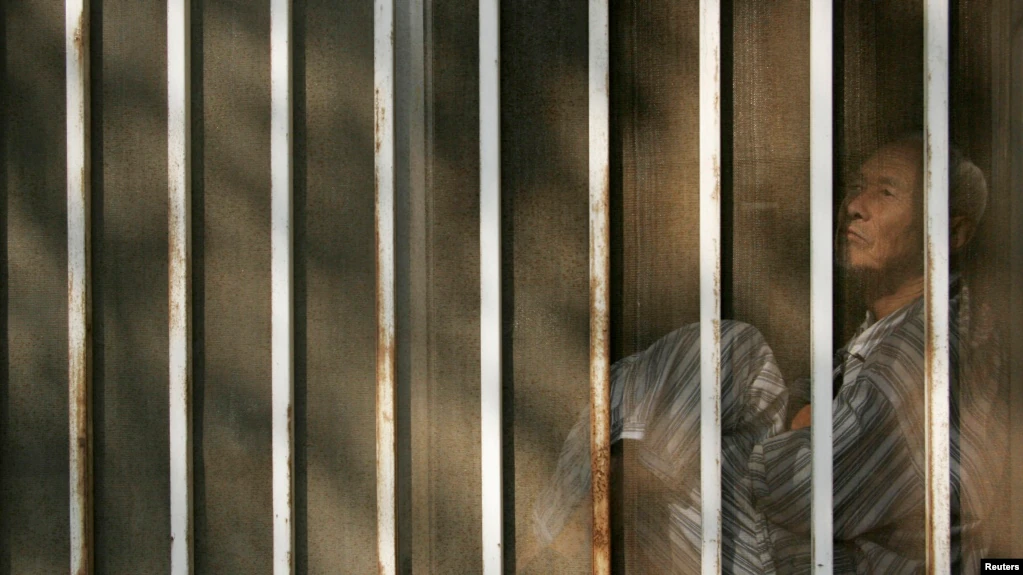
Nearly one billion people worldwide have been diagnosed with a mental illness, but they and many others are suffering in silence because they fear the stigma associated with psychiatric disorders, according to a global report. The report by researchers in forty countries around the world was published on Monday, World Mental Health Day. The report is at the center of a meeting of the World Health Organization in Geneva.
According to a new report there is no environment or country in the world where people do not face prejudice due to mental health illnesses.
According to mental health charities and researchers, an illness that is not easy to spot is often not taken seriously. (Web Only)
The report, published in the medical journal The Lancet, calls for action to end what they say is stigma and discrimination against people with mental health problems around the world.
The report is titled “Worse than the illness itself” because people suffering from mental illness told researchers that the stigma that comes with learning about their illness is worse than suffering in silence.
“It’s a paradox, why should we be so reluctant to talk about it? Because people believe the wrong things. People make unfair connections between mental illness and violence. They think that people who have a mental health problem are not trustworthy, they are not good marriage partners or they are not good work colleagues,” says co-author of the report, Professor of Community Psychiatry, Graham Thornicroft from King’s College London.
Researchers say that in many countries where there is poverty, treatment is not available and in some countries psychiatric treatments are unheard of.
The report claims that mental health conditions and poverty are particularly devastating in low- and middle-income countries.
Other mental health organizations such as Time to Change Wales, a UK region, are urging people to be more responsible towards others who may have a mental illness. Their recent promotional video highlights the problem of stigma faced by people suffering from mental health problems.
“Are you afraid to talk about your feelings with the people you love?”, is one of the questions asked in this video and continues with the next question: “Is there a generational divide that prevents you from opening up with your parents?”
“This year around the world, out of about 970 million people about a third have depression, about a third have anxiety and then there are a number of other conditions, for example about 1% of the population will have schizophrenia, about 0.5 percent of us have bipolar disorder. So they are extremely common,” says co-author Thorncroft.
According to the report in the scientific journal “Lancet”, the COVID-19 virus pandemic highlighted an urgent mental health problem.
Professor Thorcroft says there was a 25% increase in depression and anxiety in the first year of the pandemic.
Brian Dow is the Deputy Chief Executive of Rethink Mental Illness, a charity that aims to improve the lives of people seriously affected by mental illness.
He says some progress has been made in the UK with more open discussions about anxiety or depression, but the situation has not improved with more serious psychiatric disorders.
“I think it’s true to say that when it comes to issues like depression, anxiety, we have a lot of public figures who are open about their mental health and that’s a great thing. But complex mental illnesses like schizophrenia are much more difficult to understand. “I think there’s still a level of public discrimination compared to the developments we’ve seen for more moderate diseases,” says Mr Dow.
While the latest report says that in low-income countries, help for people with poor mental health is not even on the agenda.
Report co-author Thornicroft says stigma can materialize in different ways by age and country, but it affects young and old alike. Therefore, it can be said that it is a picture of neglect and disregard spread throughout the world.