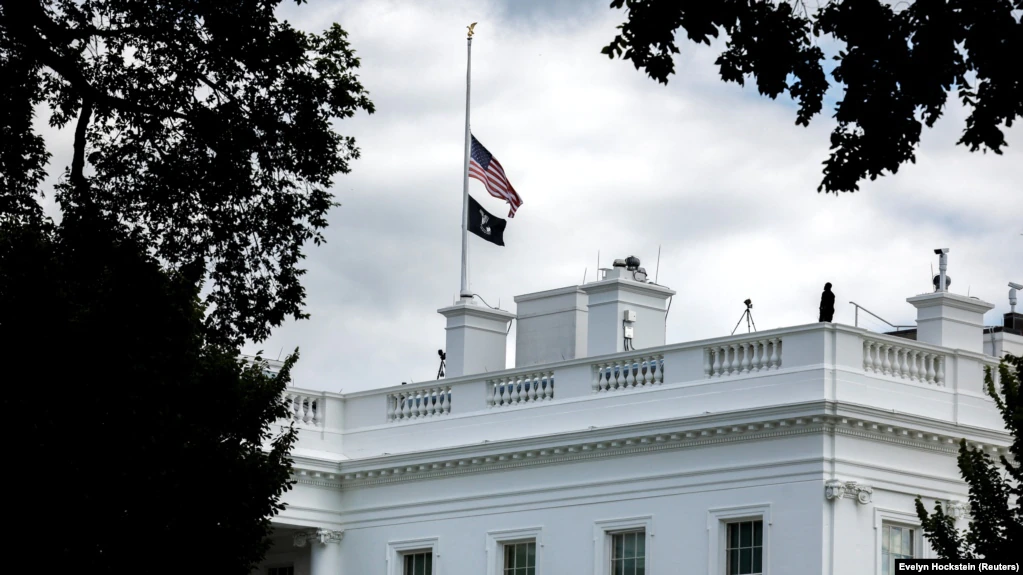
The White House is mourning the death of Queen Elizabeth II. President Joe Biden described the British monarch as a major contributor to the strong relationship between the United States and the United Kingdom. This was evident as American dignitaries, including former presidents, paid tribute to the Queen. VOA correspondent Anita Powell reports from Washington.
Queen Elizabeth II was no stranger to the White House. She came here on four state visits, five state dinners and two unofficial visits, meeting more US presidents than any other head of state, the White House Historical Association says.
On Thursday, President Joe Biden ordered the flag lowered to half-staff in her honor.
The announcement of the queen’s death arrived at the White House while press secretary Karine Jean-Pierre was briefing reporters.
“Our hearts and minds are with the Royal Family, with the people of the United Kingdom.”
President Biden, who met the queen three times, praised her for strengthening the United States’ relationship with its strongest ally.
“Queen Elizabeth II was a leader of unparalleled dignity and stability who deepened the core alliance between the United Kingdom and the United States. She helped make our relationship special.”
Britain’s longest-serving monarch was also a promoter of self-rule. During a 1991 speech to a joint session of the US Congress, she said the two countries were united through the “democratic spirit”.
During her lifetime, the Queen oversaw the independence of 17 African countries from British rule.
Earlier this year, her heir, King Charles III, pledged to continue to respect the sovereignty of the more than 50 members of the Commonwealth, mostly made up of former colonies.
“Long life brings me the experience that such arrangements can be changed, calmly and without rancor. But as I said in Barbados last November, we must never forget the things that do not change.”
Former President Barack Obama also sent his condolences, praising the Queen’s “legacy of tireless and dignified public service.”
She saw that task as her life’s work. At no point during her 70-year reign did the queen ever exercise what is known as “royal prerogative,” the refusal to appoint a democratically elected official to form the government.
And it was no different two days before her death when, at her estate in Scotland, she invited Liz Truss, now prime minister, to do just that.